Looking at creation, it is sensible to believe that a powerful, wise Being is behind it. But when one launches into describing that Being, they immediately fall short.
Why is this so? Because seeing what someone has done only tells what they can do and not who they are.
A designer of a beautiful building may turn out to be a poet. You ask how they designed the building and they wants to read you a poem.
Appreciating creation reveals more about the observer. That they have a sense of beauty and admire things well done.
How so? God created man in his image and likeness. They can recognize that One is powerful and able to create such a universe.
But they must rely on God to reveal more of Himself as He pleases.
Jesus reveals his heart as he prays with the disciples present. He says to the Father, “You have loved them, as you have loved me.” We know that the Father loves the Son very much.
He says, a bit later, to his Father, “You loved me before the foundation of the world.”
Although the first verse in Genesis says, “In the beginning, God created the heavens and the earth,” Jesus reveals that before that, He was the Father who loved His Son.
He is first a loving Father before He is a creator. He is not The Prime Mover or The First Cause as the ancient Greeks said. He is the Father who loved his Son and now loves us with that same love.
Adam I wish you could talk,Dog. I rename you, Friend of Man. Want to go for a walk? Dog Arf Adam Look there, a new fruit. Mmm. Want some? No good, huh? I am feeling really tired…
Waking up later.
Adam That was a crazy dream.
The Lord comes towards him with Eve.
Adam This is right out of my dream. I call you Woman because you were taken from me. Flesh of my flesh, bone of my bone… Dog Arf (bone?) Eve I heard about you. Adam What? Eve You like to name things Adam I’ve named a few animals. This is Dog. Dog meet Woman. Dog Sniff sniff Eve What about Dog? Adam He sleeps by the fire. Eve What’s fire? Adam Well, it’s just an idea now. It’s going to be hot. Tell me about your day? Eve So far, came to be. Then, came here. Can you believe the Lord showing me off? Adam Where did he go? Eve He told me some stuff Adam Like, what? Eve That I would meet you. Adam Me? Eve And some other stuff. Adam What? Eve There are two special trees. Adam Come this way. Eve Okay. Does Dog always go with you? Adam Lately. He is a faithful friend. Eve What about me? Adam You are… Wife! Eve What about those trees? Adam See this one? It’s the Tree of Life. Eve Beautiful. Adam Now that one is the Tree of Knowing Good and Evil. Eve What a long name… Adam I know. If you eat it, you get to know good and evil. Eve Should we eat it? What do the other trees do for you? Adam No, we should not eat from it! If you do, you will die. Eve What’s “die?” Adam Let me show you.
They walk a bit.
Adam Here it is. Look.
A bird lies dead on the ground.
Eve What’s wrong with it? Adam It’s dead. Eve No flying? No singing? Adam No. Dead. Doesn’t move. Eve Sad. I don’t want to die. Adam Then, we don’t eat from that tree. Eve What about the others? What do they do for you? Adam The fruit is different on different trees. They don’t have special names. Eve What about this one? Adam Try it. Eve It crunches, it’s yellow. And this one with the red ones? Another crunchy one. Adam Those seem to be the same kind. Eve Apples! Adam What? Eve Yellow apples and red apples. Adam Who said you could name things? Eve Did you name them? Adam No, I just eat them. Eve You’re eating apples. Adam Okay, apples it is. Check out these little purple ones. Eve Mmm. Sweet. They’re in bunches. (Eats another.) Grapes! Adam Stop doing that! Eve Why? Are you going to say to me: Go gather some little purple, not quite round ones that grow in bunches on vines? Adam Vines? Eve Yeah, vines, different than trees. Adam Okay, apples, grapes, vines. Take it easy. No more naming for today. Eve What about the ones up high on that tree? Adam They will drop down. Eve I don’t see any. Adam Something eats them, not dogs. Eve Much to learn. Adam Let’s go down by the river. Eve River? Adam There should be some animals drinking water. Did you bring your bathing suit? We can swim. Eve Bathing suit? Adam Just kidding. Fish live in the river, too. Eve Fish?
E Shorty. That’s what we called her, a nickname, I suppose. She was not tall.
I Where did you sleep?
E At first, under a bush, near the river. Later, we tried a cave. It had good and bad points.
I Like what?
E It could get cold. Adam got sheep skins. That was a lot of work. I sewed four together. The spiders liked to surprise us.
I Did you block the entry?
E We tried many rocks with one big one for a door. It was too heavy for me to move. Adam would push it at night to close it up.
I I heard the spider liked it.
E I don’t know why. Because we let the dog in? He was jealous? I gave him a good talking to. Then it indicated it was a female.
I Did that matter?
E To her, I guess.
I Okay, another subject, Naming. Did Adam name everything?
E Not really. Just the animals. I named the fruit. Apples, grapes, oranges, and the nuts, pecans, pecans, Brazil nuts.
I Brazil nuts?
E Got you on that one!
I You have a sense of humor.
E You have to, so much sadness. Adam would come in from the field and say, “Just look at my brow!”
“Very wet,” I would say. “Want a leaf?” He would say, “I’m too tired to go down to the river, right now. I’ll just sit in our cool cave a while.”
I Very interesting. What about him blaming you?
E Oh, that was a cheap shot. “She gave it to me.” Man up.
I You blamed the serpent.
E Who was left? I guess I was not really beguiled by it. I do hate snakes, though. Always have.
I Did you ever get over it?
E We finally agreed to drop the subject. Adam agreed and we never mentioned it again.
I What did you tell your children?
E That is your best question so far. That was a thing. Do we tell them how we messed it all up?
We did warn them about the way to the old garden with the fiery sword. I think Cain went to see it.
We told them how God created us but glossed over our mistake.
Cain asked why we couldn’t go to the Garden. That was a tough one. Adam said loudly, “Because we just can’t!”
Another question: “Where is God?” They didn’t see him. I heard Cain talked to him but not what that was about.
Cain was a poser. Hard worker. But very jealous of his younger brother. So jealous! You could see it in his face.
Were we to blame? We just liked Abel better. We admired Cain a lot. He worked so hard.
I think we were prone to mistakes because of, you know…
I That is so much information. no more hard questions. What was your favorite fruit?
E Again with the fruit!
I Sorry. Was Adam adventurous?
E Yes, at first. He climbed a tree to see how far the garden went. When he told me, I said “What if you fell?” Do you know what he said? “Angels. Angels would catch me.”
I Did you see angels?
E That was just it. We never saw angels until after…
I He believed angels were all around you.
E And they kept us safe. He had an idea to float down the river on a broken tree. He talked himself out of that one.
I How?
E He said, “I would have to walk back a long way.” He didn’t want to do that.
“It’s not really where you are. It’s where you’re not”
“Where am I not?”
“On earth”
“What happened?”
“You tell me”
“I had a name. It was, I mean, it is, uh, Abe, no, Abel. I had a family, a mother, a father, a brother… We were out in a field…. My brother was going to show me something. Cain, Cain was his name. Then I was here.”
“He is there – You are here – He killed you”
“No, he wouldn’t do that.”
“He did”
“Was it an accident?”
“No”
“Wait”
“I am good at waiting – Do you want to sit down? I have a bench It’s right here”
“This makes it better, somehow. The white bones and the black robe…”
“I wanted something that said ‘Death'”
“And the hollow echo-like tone…”
“That is a choice”
“Is there anyone else here?”
“No, just you and me”
“What do you do?”
“I am in charge of death orientation – I answer questions – as I can”
“Is it boring?”
“We don’t think like that”
“Who are ‘we’?”
“Eternal beings – Did you ever go see the Garden?”
“We couldn’t. There was a guard. And a flaming sword. I wanted to go see but they wouldn’t let me. Cain said he went but I don’t think he really did.”
“I am going to appoint you as Deputy of Orientation”
“Really? What do I do?”
“You sit on this bench until someone dies”
“Wow. When do you think that will be? Wait, there is no time here…”
In the beginning, Adam and Eve had no fear at all. But fear became part of the human experience. Just what fears entered their lives?
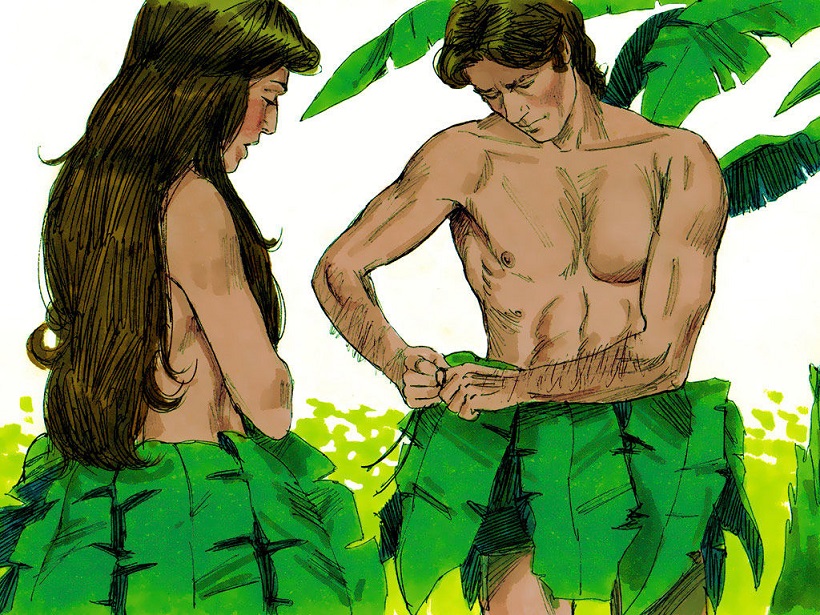
Their first fear came with their discovery of their naked condition but just what were they afraid of? It doesn’t appear to be danger of being injured. It rather seems to be acute awareness of their vulnerability to the general environment. It says “their eyes were opened and they knew they were naked”. The intense feeling of being naked motivates them to make coverings of leaves.
As they anticipate the arrival of the Lord, they run and hide. This is an act of pure fear. They stop running as reason comes back but let Adam explain, “…I was afraid because I was naked and I hid myself.” Adam speaks as if they had no handmade coverings. He needed a lot more leaves between him and God. Adam speaks as a man who feels alone in the world.
We can be sure of this: they did not want to be seen as naked. Adam becomes silent as the reason for his fear is examined. Adam blames Eve, Eve blames the snake and both imply God is somewhat responsible by giving out wives and creating sneaky creatures that bother innocent people.
The source of their fear is separateness. Adam is now separated from God, his wife, his environment. He is even divided within himself, he feels blame but tries to cast it off himself without success. With this separateness will come sorrow for both the woman and man.
We turn to the first man born: Cain. He discovers a new fear. Cain remakes himself into a heartless murderer. Cain has discovered killing is rather easy and now he fears retribution.
Eve indicates her fear of having no one to lead the family after losing Abel. She and Adam find hope in their new offspring, Seth.
The next fear is fear of drowning. At first, no one but Noah and family take this seriously. They build a boat for the purpose of surviving an enormous flood. When the flood waters eventually start to rise, the people find their fear will not enable them to find any way to save themselves. There is no time left now.
We learn about another fear from Noah. It is a fear of disrespecting order. The patriarchal family of Noah and his sons is now the foundation for a new society. This is endangered by one son who shows disrespect for his father. Noah recognizes the danger of this and deals with it before it can topple the fresh start.
The Lord does not want men to be full of fear. His remedy for fear is trust in God. He cares even about the small birds and will surely care for those who trust in him.
We look among the faded tatters for glory. But why does the true glory escape us?
We know a human life could be glorious yet why do we always discover a fatal flaw? So we idealize. We build pedestals and place something high. But we know it is our imagination.
Why the idol? Why this statue? We demand meaning! But we know we are making it up. We read and hope to find meaning. We listen. We look. We are always ready to stick a stake in the ground and say, “Here is meaning.” But it is only a grave marker. Read this poem. Listen to that song. Hear this orator speak. Consider this artwork. Look at that building with its majestic lines. That bridge is so much more.
In the museum, look, there is David. And what moved the sculptor to trace the beauty of the female shape in such detail?
All shadows. All former glory. All that is left are hints. Indications. We gaze at the ruins of humanity and imagine its greatness. Yet, we can’t look too close or we see how it is not what it was or what it could be.
Isn’t that where we look best? Former greatness. The ruins of a civilization. As we look closer, we find human sacrifice. We find falseness. The golden statue is a thin shell full of sawdust. The soaring tower was used to hold men captive. The cellar is filled with bones and rags.
The throne is dusty. The former greatness is gone. The halls are empty. The paintings faded. The glory is gone.
What happened to us? Why are we disappointed as we examine things closely? And the disappointment sinks slowly into despair.
The canvas of human history has been painted on over and over. This time we will get it right. We will promote goodness. We will learn from past mistakes. But something trips us up once again.
What is that which keeps us from glory? We desire to see it. To feel it. We know it is there, just beyond our grasp.
And we are right. The glory of man is our destiny. But we are in our own way. The ego opposes the conscience. Yes, it is the outsized ‘me’ that is in opposition to the ‘you’ that desires glory. We can’t grasp glory because to touch it is to foul it beyond recognition.
And for this very reason, our glory, which we are meant to have, has been moved. Our hands must be washed before we can handle our glory. Our glorification awaits us. Maybe it can’t be found here. Can we follow the traces? Can we find the beginning by starting at our end. Will knowing the beginning help us?
The European watched the Nile flow into the ocean. He wondered where the magnificent river began its journey to this sea. He enlisted others in the search. Yet, each try ended in failure. One man succeeded. He wasn’t even trying. He began at a lake unknown by the Europeans. He started at the source.
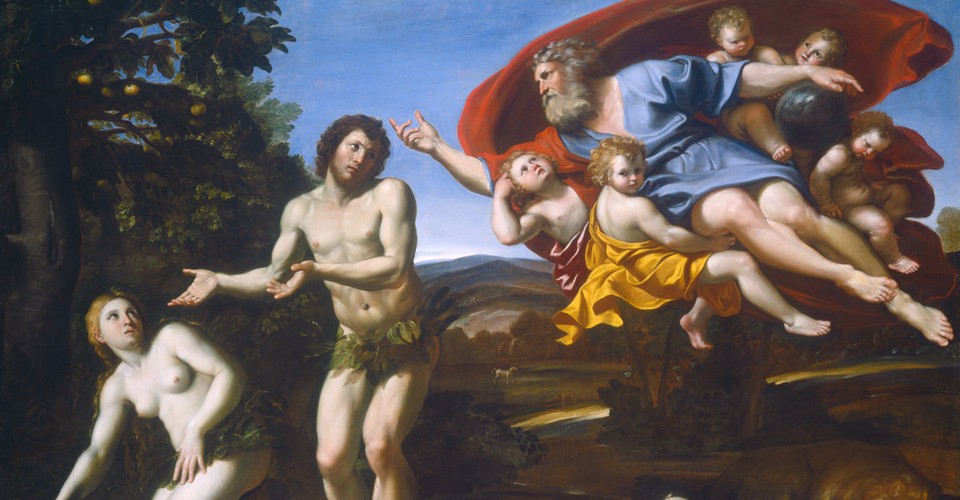
Then the Lord God said, “Behold, the man has become like one of us in knowing good and evil. Now, lest he reach out his hand and take also of the tree of life and eat, and live forever—” therefore the Lord God sent him out from the garden of Eden to work the ground from which he was taken. He drove out the man, and at the east of the garden of Eden he placed the cherubim and a flaming sword that turned every way to guard the way to the tree of life.
Adam was the first man. Enoch came a few generations later. Enoch has a very short biography. He seems rather ordinary until he has a son. We can put his whole story right here:
When Enoch had lived 65 years, he became the father of Methuselah.
After he became the father of Methuselah, Enoch walked faithfully with God 300 years and had other sons and daughters.
Altogether, Enoch lived a total of 365 years. Enoch walked faithfully with God; then he was no more, because God took him away.
This is a short biography. And each line is important.
His son is Methuselah. Maybe you heard of him. “As old as Methuselah.” But when Methuselah is born, things change for Enoch. This event was when Enoch became God’s first friend. Enoch walked with God. He continued to do this for 300 years. It becomes the characteristic of his life.
Enoch is the first man who had a good, continuous relationship with God. After 300 years, Enoch disappears. He’s gone. He didn’t die. God took him. God liked this guy.
Why are we given no details? This is a personal relationship between God and Enoch. And God is interested in the individual. There are no groups with God. He is well able to focus on each person.
Enoch has no good example to follow. He cannot say, “I will be like …” Enoch is not given a great decision like Adam. He is not given a great task like Noah, his grandson. He lives an ordinary life but does so in an extraordinary way. He walks with God. No one instructs him. No one shows him how to do this. He blazes a new path in the world very quietly. His story is often overlooked because it contains no dramatic events until the end.
No one has made a movie about Enoch. He does not leave a method behind. His example tells us that we must find our own relationship with God. What is remarkable is that Enoch walks with God for 300 years. And what began with an ordinary event, the birth of a son, ends with this dramatic event: he disappears. He has no grave. No one witnesses his final moment on earth. No one sees him go. But God takes him none the less.
Enoch is not an old man by contemporary standards. God decides to end his earthly time early. He wants his friend closer to him. In this, God shows his approval of Enoch’s life. Enoch walked with God and ‘he was not’ for God took him.
Enoch is an example of faith. It says, “And without faith it is impossible to please God, because anyone who comes to him must believe that he exists and that he rewards those who earnestly seek him.”
Is God angry? What is God angry about? Some say that God is angry at sinners. Then others quickly say, “He hates sin not the sinner.” What does that mean? He doesn’t expect us to stop sinning, right?
Jesus said, “Go and sin no more” to several people.
Does he really believe people can stop sinning. And who started all this sinning anyway? Let’s look at the first two people. What did they do to start this sinning?
They had one rule. One rule! Don’t eat from a particular tree. That seems easy enough, I mean, why would they? But why even have a rule anyway?
It was like an exit sign in the Garden of Eden. There was a conscious choice to be made. The eating of the fruit came with a warning. “Dying you will die.” The other tree that came with a name was the Tree of Life. Self-explanatory, I guess. What attraction did the first tree have? It would give you a knowing of good and evil. We know they ate from it eventually. So, they got the knowing. We still have it. So, Adam said, “Hey! This is great. I feel wise. How about you, Eve?” No. He said, “I feel naked! And it is not a good feeling.” “Yeah, let’s make some coverings,” said Eve.
So God spoils their clothes-making by booming out, “Ha! You did it! Here are some punishments to go on top of your miserable state.” Not at all. He simply asked, “Where are you?” He didn’t accuse them. He gave them a chance to explain but they used it to cast blame elsewhere. But didn’t he curse them? Read it closely. He did not curse them. He did curse the serpent. He did curse the earth in that it would not be so friendly to them now. But would he curse those he had blessed? No, he did not.
He made them clothes to help their uncomfortable condition. Good clothes, better than leaf ones. And the ‘punishments’? They were more like reminders that something was wrong now. So, what was their sin? Eating fruit? No. Choosing their own way to live without God’s good guidance. So ‘to sin’ is to make your own decisions without reference to God, and even to go against his clear direction.
Let’s look at someone Jesus told to “sin no more”. Her sin was clear. It had become a lifestyle with her. But where was she now? She was close to Jesus. Close to Jesus and away from the condemnation being heaped on her. She was near Jesus and forgiveness. She was in that circle of righteousness Jesus always had about him. Outside of it was wrongdoing and hypocrisy. That is when he says to her, “Go and sin no more.” Yes, take your new righteousness with you into the world and don’t trade it for a sinful life again.
Now, if God is so angry with us, why do we see it so rarely in Jesus? He takes time to reason with with those who purposely misunderstand him. Yes, he has no time for those who want to manipulate him and make him conform to their ideas of him. But, he simply leaves them, rejecting their plans for him.
We do see his frustration with his friends. When the ones closest to him who would not accept his words and embrace them in faith, he is abrupt at times. He got angry with Peter for the idea that the Messiah should not suffer? He knows the Messiah must suffer. But he shows great patience as he explains to Martha about her brother, Lazarus, and says, “I AM the resurrection and the life!” Right here. Right now. But when her sister, Mary, comes complaining about his late arrival, he says, “Show me where you have laid him.”
He weeps. Is this an angry person? No. He feels the sadness death brings to people. He understands people who don’t realize that death is not the end. Lazarus must return from bliss to show them he is still the same person. But listen. Now he speaks: “Lazarus, come forth!”
God sees you as you were meant to be. That you and I don’t see that, concerns him greatly. Though his love compels him to act, he does say we need to believe him. His love is freely given and can only be freely received. He says, “Come, follow me.”
The Jewish people had a pretty clear idea of sin. But some were using it to separate people into groups or kinds of people: Good and bad. Sinners and righteous. Our kind and their kind. Jesus didn’t accept the idea that people could not change for the better. His message of good news is that God will forget your past and bring you into his family. He extended this message to all people before he left for heaven.
So, where is all this God anger? We didn’t see it when our first parents went against his good advice. People insist on their own way to happiness. How did he show his love? He put himself into the hands of sinful men. They discredited him. They rejected him. They condemned him. But that was not enough. They demanded his humiliation and brutal death by their hated overlords. A reluctant Roman governor yielded to their threats and he was then given Rome’s worst punishment. This had been carefully crafted to give a slow, painful and humiliating death.
This was his demonstration for all time of what sin did to people. It made them jealous, hateful, vindictive, merciless, and conniving. It turned people against a fellow human without any sense of pity for one so unjustly accused of wrong. He became just one more of so many hundreds of Jews killed by the Romans. They were to be subjugated by force. Who cared if some died undeservedly?
But this righteous man returns. He offers to change people from doing evil from a bad heart to doing good from a new heart. He offers a powerful change for any and all who will believe.
But will you and I embrace that change. We will begin to hate sin, too. We will become aware of the death and destruction that are the results. Will we, like Jesus, delight in the good will of God? Will we trade our heart of uncaring stone for a human one?
We can stand with God. We can love God and love goodness. This is the only cure offered by the Doctor of human souls: Jesus. All others are charlatans and quacks who cannot cure the soul. They offer remedies that never reach the deep part where the change is needed. This change toward God will turn us again toward people with love and hope for them.
Yes, the anger of God will be seen one day. It will be toward those who opposed God and his redemption of men. First, against the adversary of God who is not a human. Those who side with him against God will share his punishment. All lies will be exposed. All motives will be shown. All secrets will be told. And Jesus will be seen as he is in all his glory. He will take his rightful place and continue his work of making us into the image of God.
We have heard of a tree called The Tree of the Knowledge of Good and Evil. This tree was in the Garden of Eden. Adam and Eve ate the fruit from this tree. We still use the expression ‘the forbidden fruit’. The warning about this tree was this: “but you must not eat from the tree of the knowledge of good and evil, for when you eat from it you will certainly die.” It has also been translated ‘dying, you will die’.
As we know, another voice suggested they eat that very fruit. That voice told them that they would not die. Rather, they would gain an ability to judge things for themselves. The words contained this phrase, ‘you will be like God’.
Their reaction to eating this fruit was very strange. It says, “they realized they were naked.” Rather than gaining some power that made them like gods, they found themselves to be naked and they didn’t like it. They took leaves and made themselves coverings.
It seems that the Lord God would visit them. They hear him coming and they run away and hide. Adam hears the voice of the Lord saying, “Where are you?” Adam replies, “I heard you in the garden, and I was afraid because I was naked; so I hid.” Adam does not know how to lie. We can believe him. He says he was afraid. Afraid because he was naked. That is why he hid.
We have little idea of how they felt before eating this fruit. But it seems that ‘being afraid’ was new. My question is this: why did ‘being naked’ bother them? And what were they afraid of?
Adam had gained a self consciousness that was uncomfortable. He became extremely aware of himself in his body. It was like he woke up and discovered he was naked in a world that suddenly seemed somehow dangerous. He was separate from everything else. He knew he was a person before. He was Adam. He had a wife. But now, he felt alone. He says “I” four times in his short response to “Where are you?”
He feels separate from his Maker and Benefactor so he hides. He feels separate from his wife and calls her ‘the woman’. He realizes that there is at least one creature, the serpent, that deceives people. There is some danger on this earth. Maybe there is more. This is the thing that bothers him. His nakedness means he is alienated from everything else. It is just him, in his body, and that body does not seem enough. It needs a covering of some sort.
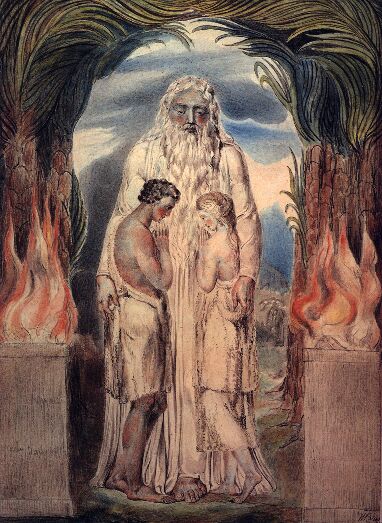
A lot is made of the ‘punishments’ that are given out by the Lord. But sometimes left out is that he gives them better coverings. He clothes them. He becomes their tailor as someone said. They are also sent out of the Garden area. But why? Because of the other tree, the Tree of Life.
This Tree of Life becomes a problem. God takes away their access to this tree. What exactly is this tree? All we know is that it will give people the power to live forever.
It seems that the choice they had was either this tree or that tree. They chose one and now lose their chance to eat from the other. The next time we read about it is in John’s vision of the future, “On each side of the river stood the tree of life, bearing twelve crops of fruit, yielding its fruit every month. And the leaves of the tree are for the healing of the nations.”
We have this tree in the past. We have it in the future. But what about now? Is our choice lost? Can we gain this eternal life or is it now denied forever. The same bible that tells us of the Tree of Life, contains other statements about eternal life and how to get it. Jesus makes several statements about this.”
“Very truly I tell you, the one who believes has eternal life. I am the bread of life. Whoever comes to me will never go hungry, and whoever believes in me will never be thirsty.”
“Whoever drinks the water I give them will never thirst. Indeed, the water I give them will become in them a spring of water welling up to eternal life.”
“For my Father’s will is that everyone who looks to the Son and believes in him shall have eternal life, and I will raise them up at the last day.”
“I am the bread of life that comes down from heaven, which anyone may eat and not die. I am the living bread that came down from heaven. Whoever eats this bread will live forever.”
Jesus compares himself to something you eat: bread. And something you drink: water. He says the result of this eating and drinking is eternal life, living forever. So we do have a choice now to have eternal life. But we have to eat ‘the Bread of Life’ not fruit from the Tree of Life.









 stable-time.com