

In Genesis, it says this:
And the eyes of them both were opened, and they knew that they were naked; and they sewed fig leaves together and made themselves aprons.
To what were their eyes opened? To themselves. To their weakness. It was a very uncomfortable awakening. They had to take action. They made clothing out of leaves.

But this covering was not enough. When they heard the Lord, they ran and hid. Some say they were motivated by guilt. I don’t think so. Listen to Adam: “I heard your voice in the garden, and I was afraid, because I was naked; and I hid myself.” He says nothing about feeling guilty. He says he was afraid because he was naked.
Why do they feel so vulnerable? Their new separation from God made their self-awareness nearly unbearable.

Contrast this to the revelation of Jesus to the open eye of faith. This is a view that looks outward. We see the same Lord as Adam having come to rescue us with more than a covering of animal skin.
We respond in faith not in fear. We run towards him not away from him. He offers us a robe of righteousness. He has purchased this robe with his own blood, not the blood of animals.
The result is an awareness of God not ourselves. We already know we are weak and alone. That is why the rescue of God is so wonderful. We see his strength. We see the man who did not fall to temptation. We see our true hero, our Saviour.

This is a much better eye-opening experience that Adam. And make no mistake. If you see Jesus as the Son of God, it has been revealed to you by his Father. Your faith in response connects you to God.
We have received the grace of God. We know God as Our Father. Adam walked the earth as disconnected from God. Yes, he walked in clothing given to him by the Lord but he did not experience the closeness he had before.
Why not? He gave the wrong answers to the questions of the Lord. He blamed another not himself. He might have received immediate forgiveness. We can’t know because he refused to accept blame.

We never hear from Adam again. We don’t know his reaction to the curse on the earth. We know he raised a family and found that the curse on the earth did not prevent him from farming but only made it difficult.
But we find the Lord offering us living water. He says, “Whoever drinks the water I give will never thirst again.” He offers himself as the Bread of Life. And Jesus said unto them, “I am the bread of life: he that comes to me shall never hunger.”
Jesus speaks in simple words that we can understand. But they are spiritually understood. This bread is not gained by the sweat of the brow, but received as the gift of God to needy yet undeserving people like us.

He knows our needs more than we do and has come to satisfy our greatest need. He is the Tree of Life, the Water that destroys thirst, the Bread from heaven, the True Manna and more.
He says, Come and buy, without money and without price. He knows we could never afford the price and so gives it to us free instead, having paid the price himself.
Although God has a dwelling place on earth, it is not a temple with great adornments. It is not a cathedral with an awe-inspiring ceiling. It is not even a standard Protestant church with a discreet steeple. And it’s not a plain building with a fancy name.

No, it is none other than the human heart. Are you surprised? You think God stays at the church when you go home? When the Lord says:
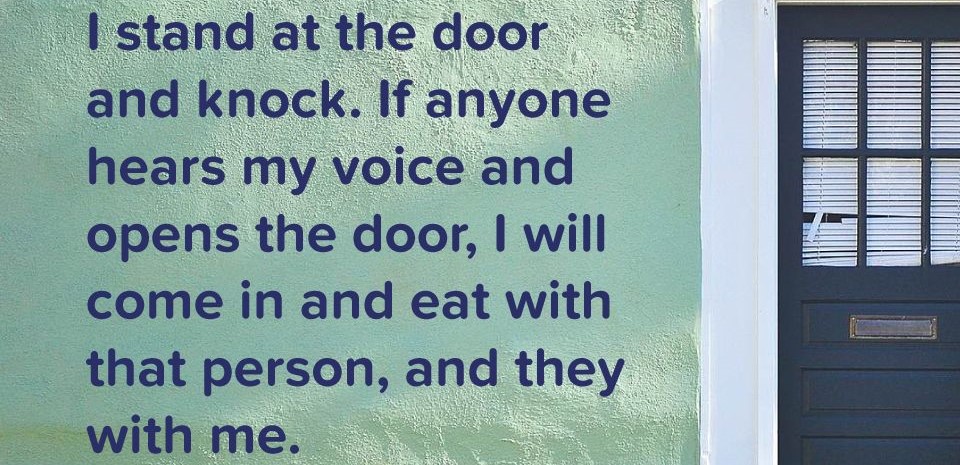
we do not think it’s a literal door made of wood. We say, it’s the ‘door of our heart’.

Jesus is not a home invader. He can only be invited in. But maybe we are not ready for him. It’s a mess in here, come back later, Lord. But he does not care. He wants to be with you. He doesn’t evaluate your dwelling beforehand.
He knows your place is a fixer-upper. He has seen worse. He doesn’t care. He is there to improvement your life. But he doesn’t start with that. No, he wants to sit down and have dinner with you. Even if it’s Chinese take-out. He is there for the company, your company.
But I am not worthy for you to stay with me, Lord. I need to fix things up. Go ahead, he says, I will help. Do you want suggestions? That stack of magazines can go. I was just thinking of taking them out to the trash, you say. When you return, there is a new rocking chair in that place.
He is not there to make you feel guilty. He is there to help you feel clean. He wants you to have a clear conscience. Look, I am going up to clear out the attic, he says. You do what you think best down here.
But that attic is full of a lot of old worthless junk! I know, he says, we are not going to let the past hold you back.

Later, he says, I’ve been looking at your record collection. Do you think something more hope-filled could be better? It’s a rather depressing catalog. It is, you say, I used to be depressed a lot. I don’t feel that way, so much, now that you’re here.
What do you say to better food in your refrigerator? We can have a diet of better things. Yes, you say, I’ve been chewing on guilt and envy too long. What about mercy and pure love? he asks. That does sound better, you say.

Lord, when I would lay down, my mind was full of worry and frustration. Now, that you are here, my sleep is peaceful.
Lord, I had my doubts when you knocked on my door. Now, I have no doubts. In fact, faith has replaced doubt. The order you have brought allows me to have a clear conscience. Light fills my rooms now that we have brushed away cobwebs and cleaned the dirty windows.

How do we approach God? There have been many books written about this. But it comes down to this: Each of us must find God in their personal relationship with him. Enoch walked with God. We have no more details. He walked with God for 300 years. He “walked” with God. He did not run. He moved through life at an unhurried pace.
First, we must be patient. God is not in a hurry. We must slow down to meet him.
Be still and know that I am God.
We are encouraged to slow down. To be still. Even to stop.
And Enoch was constant. He continuously walked with God for many years. Do we think we can “know” God in one encounter? We can “meet” God in one encounter. Enoch kept walking with God, year after year.
Do you want to sense the presence of God? Do the will of God. Part of the will of God is to “Be still and know that I am God.” We can’t be in tune with God unless we know his nature. We must begin with God to know his will.
God is the most attractive Being. But, like the sun, he is dangerous. His holiness, goodness and purity are beyond our comprehension. But he has the ability to make us his friends who were once alienated from him. He can actually make us holy. His forgiveness is so thorough that we can draw close to him.

Maybe as we are being still, we can realize we are seated in the heavenlies. This means we are secure in our relationship with God. Now, we begin to “do the will of God” by taking a clear statement of Jesus and putting it into practice. “And this is the will of God, to believe on the One whom he has sent.” Or, “You believe in God, believe also in me.” We learn the will of God by doing the will of God. If you want to “know” the will of God, begin by doing the will of God you already know.

Why would God give us more specifics of his will if we are not doing what he has revealed already? We can listen to the experience of Abraham’s servant. “And I bowed down my head, and worshipped the Lord…who had led me in the right way…” He had followed Abraham’s instructions, but he needed more direction. He found it in doing what he already knew. It will be the same with us.
God is become everything to you, and God has made everything for you. He has made the dwelling, and is become your refuge. This one is all, and this all is one.
It is the house of God, it is the city of the King, it is the body of Christ, it is the bride of the Lamb. It is the heaven, it is the sun, it is the moon, it is the morning star, the daybreak and the evening. It is the trumpet, it is the mountain, and the desert, and the promised land. It is the ship, it is the way across the sea. It is the net, the vine, the field.

It is the ark, the barn, the stable, and the manger. It is the beast of burden, and it is the horse. It is the storehouse, the court, the wedding-chamber, the tower, the camp, the battle-front.
It is the people, and the kingdom, and the priesthood. It is the flock and the shepherd, the sheep and the pastures. It is paradise, it is the garden, it is the palm, the rose, the lily.
It is the fountain and the river; it is the door, it is the dove, it is the raiment, it is the pearl, it is the crown, it is the scepter, and it is the throne. It is the table and the bread, it is the spouse, the mother, the daughter and the sister.
And, to sum it all up, it was for this, with a view to this, on account of this, that the whole of Scripture was made. For this, the Word was made flesh, God was made humble, man was made sublime. If you have this, then you have everything.
Hugh of St Victor
How can we know God? We may believe that if we do, we will have peace and joy in our lives. So, we want to pursue him. We can learn about God, about his nature from his Son, Jesus. But we are in a quandary. God dwells in the human heart after two modes namely, by knowledge and by love. Everyone who knows Him loves Him, but nobody can love Him without knowing Him.
Someone who wants to find out about another person’s character and inner thoughts gets on friendly terms with them and is often in their company. They find out who are their friends. And if they see this person as worthy of their love, they can open their heart to love them.
Let us find out where God is and question his friends concerning him. He is faithful, if it is not in him to deceive people. If he freely pardons those who sin, then he is kind. If he shows pity to persons in trouble, then he is merciful. And he is lowly, if he rules his people not by oppressing but by helping them. If he is faithful, then he merits praise. If he is kind, if he is merciful, if he is humble, then he deserves our love.
It is difficult to have faith in God because do not see this kind of love in our daily lives. We see love that trades this for that to get something. We see love for family, but we are not in that family. We see love for others, but it is limited to those like-minded. We see love that has its limits. We do not see love that is unlimited. And God is invisible. We can’t see him.
Our method is faith. Do you say that you have no faith? Of course, you do. If you sit on a chair, you have faith. If you get into a elevator, you have faith. You and I have faith about many things, every day. You say, I have faith in the chair because I saw someone sit on it. I have faith in the elevator because I saw someone get out of it.
Okay, find someone that has faith in God. Ask them why they do. They should have an answer. If they don’t, find someone else. Ask them how God treats them. We can even learn from those who have a grudge against God. Does God deserve their hate? See if you agree that their hate for God is deserved. Some are mad at God. They say he doesn’t care because he won’t fix the world. Have we thought what that would mean: the end of free will.

There is a reason to forget God. If you want to exercise that free will and do what you want. And God will let you. You always get a choice. You don’t get God if you don’t choose him. But remember this: he is all good and wants to bless you. And he always has.
Draw close to God and he will draw close to you. He will not impose. It says, he stands at your door and knocks. Do you hear that knocking? If you answer the door, he will come in. And if you ask him to stay, he will do that, as well.
Now, therefore, enter your own inmost heart, and make a dwelling-place for God. Make Him a temple, make Him a house, make Him a pavilion. Make Him an ark of the covenant, make Him an ark of the flood; no matter what you call it, it is all one house of God. In the temple let the creature adore the Creator, in the house let the son revere the Father, in the pavilion let the knight adore the King. Under the covenant, let the disciple listen to the Teacher. In the flood, let him that is shipwrecked beseech Him who guides the helm.
Hugh of St Victor
“Let him kiss me with the kiss of his mouth.”; “stay me up with flowers, encompass me with apples, because I languish with love.”; “your lips are a dropping honey-comb, honey and milk are under your tongue, and the smell of your garments is as the smell of frankincense.”
Can you think of words more pleasing and sweeter? These words are delightful. Can they possible be spiritual as well as romantic?
Can we put these words together to describe the spiritual? This may be the reason we like these words. They speak to both parts of our nature. It’s a thing that fills us with wonder.
We heard words from Jesus that are difficult to process. When we read words from the Song of Solomon that are almost embarrassing to hear, do we turn the page or try to use them to find the spiritual meaning? The first is a hard saying. The second is too much to be polite. Try reading those passages from Song of Solomon out loud at your next meeting.
Yet, we are told that both speak of a spiritual relationship with God. So important is an intimate relationship with you that God will use any means to get you into that love relationship.
Why does the first commandment tell us to love the Lord your God with all…?
Why does Jesus use himself to give a new commandment? Love each other as I have loved you. Because God knows no other relationship. It is love or nothing with him. He knows you and he loves you. He knows you have done wrong and he forgives you. He knows you have been far away and he wants you close to him.
This is the story of God and man: God made man like himself. Man chose to go away from God. God has always wanted to bring the man back to himself. He wants a deeper relationship with you than he had with Adam.
We think of Adam as perfect, and he was. But he was perfect in innocence. And he did not know God very well. How can I say that? If he trusted God, he would not have eaten the fruit of the Tree of Knowing Good and Evil. He would have remembered the words of God and withstood the wily creature. I mean the serpent not Eve. If he had loved God, he would have not chosen to eat from that tree and put his relationship with God in question.
Both Adam and Eve blame others. He blames her. She blames the serpent. Neither is sufficient for God. He gave his word to them not to any other creature. Nor will he accept that Eve is all at fault. You notice neither one accepts any blame.
What is true is that Adam and Eve were not in a final state. We are more knowledgeable of Jesus than they were. We know what he said and did. And we have been given a gift greater that innocence. We have been given his Spirit. Yes, the Spirit of God lives within us. Not so for them.
It reads, “And the LORD God formed man of the dust of the ground, and breathed into his nostrils the breath of life; and man became a living soul.” Genesis 2
He had life as a living soul. There was no reason for him to die. He had the Tree of Life available to him.

So, we have a way to connect with God that Adam did not. And we understand more of the nature of God. He wants to give us eternal life, better than Adam had. He wants to have a closer relationship with us than Adam had.

We don’t know how the path of Adam could have gone. We do know how to reconnect to God. Jesus explained it. God has removed all obstacles to getting close to him. We have, like Adam, no excuse.
How can we understand that which is spiritual? We may read in the Scriptures, light is where God lives, “Because He dwells in light unapproachable.” We want to understand that immaterial light is inhabited by the incorporeal and invisible God.

And just as the material light falls on the eyes of our body, so that divine light illuminates the eyes of our mind. So, by pointing to the nature of visible objects, we rise to think of the invisible. Therefore, we convert to its spiritual meaning certain things we read in the Scriptures.
Jesus said at one point, “You need to eat my flesh and drink my blood, if you want eternal life.”
Then Jesus said to them, “I am telling you the truth when I say to you, Except you eat the flesh of the Son of man, and drink his blood, you have no life in you. Whoever eats my flesh, and drinks my blood, has eternal life; and I will raise him up at the last day. “
Jesus said to his disciples, “Does this offend you? It is the spirit that quickens; the flesh profits nothing: the words that I speak to you, they are spirit, and they are life. ” John 6
Eating the flesh of another human is a terrible thought. We call it cannibalism. Yet, Jesus uses such language to make his point. He was using bread to make his point but switches to this. Why?
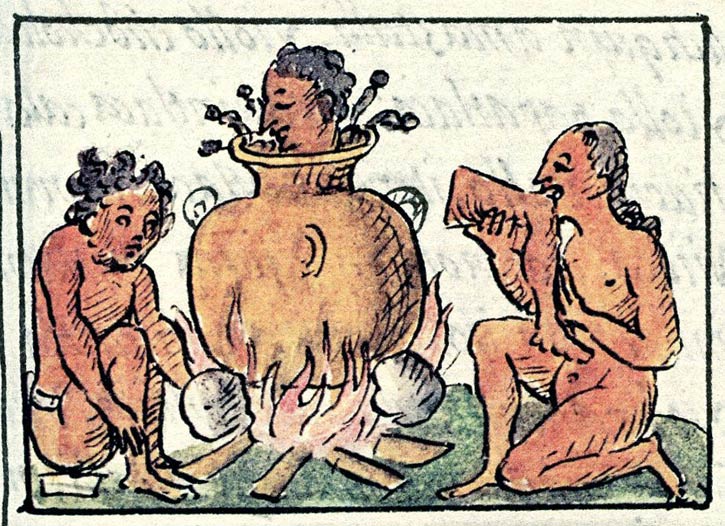
There can be only one reason. It is of the highest importance. Some said, we cannot listen to this man any longer. They left. Jesus then spoke to his closest disciples. Of course, it is spiritual language. What good would eating any kind of flesh be in gaining eternal life? It is spiritual language, spiritually understood. These words are life-giving.
He, later, institutes eating bread and drinking wine as a way to remember him. He says, “This is my body, broken for you; this is my blood, poured out for you.”
The physical has spiritual meaning. We understand the invisible by the visible. Even more so, acting out the spiritual by doing something physical like eating bread and drinking wine, we understand something wonderful.
We sat on a bunker and watched him come in
Hanging from a chopper on a line that was thin.
Just one lone marine that was left from the fight.
The rest of his team had been swallowed by night.
Yes, deep in the jungle they had hit a main force.
They had known if that happened, what would be their course.
Just as soon as it happened, they radioed fast
But with the fire fight building they knew “We can’t last.”
With their smoke they had signaled, so they fought as they could.
They were losing ground quickly, had their smoke done its good?
Then they heard it above them, the choppers had come.
But two of the four would no longer see the sun.
The choppers were blazing, the fight would be won
But the third man was down, and his battle-days done.
The choppers kept firing as the enemy ran,
And a line then was dropped for that one lonely man.
He was wounded and hurting, but that line he held tight
For that line alone, would take him from that sight.
The rope burns didn’t matter nor the tearing of flesh.
He was holding that “life line,” as if it was his breath.
O that man on that chopper, that one lone marine.
He will speak of that “life line,” with fire it seems.
And the reason is simple I’m sure you can see.
I can still hear him saying, “It saved me…saved me.”
Our Lord like that lifeline that was dropped from the sky
Came willingly down and he knew he would die.
And the pain and the sorrow didn’t matter you see
Cause he knew if he did it, he could save you and me.
We’ve been given a “life line” in this life’s battle zone,
And if you grab onto it, it will carry you home.
We won’t have all the answers this side of the grave,
But one day we will, from the one who can save.
Yes, one thing I will tell you, our “life line” is here,
And even in this place, he’ll sweeten your tears.
This life here is passing, it’s passing so fast
Please…grab onto this “life line” before it goes past.
Written by Tom Brown, a marine who spent time in the worst of the Vietnam War.

